
 by
by 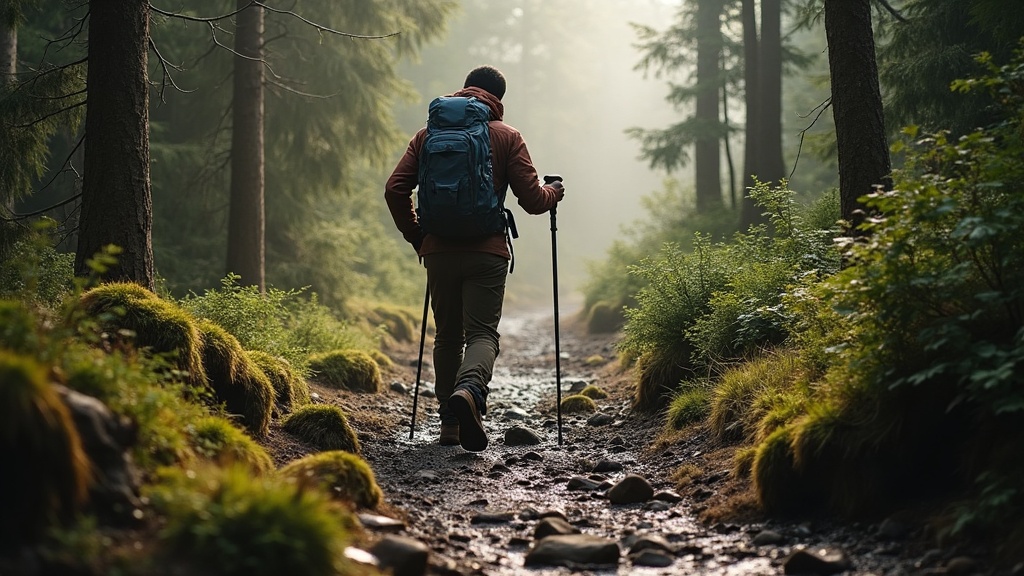
Poles are not just for older hikers. They are for anyone who has ever descended 800 muddy steps after a long ridge day.
Where They Help Most
- Long descents — Roys, Tongariro, Ben Lomond
- River crossings with unstable stones
- Muddy root sections — extra points of contact
| Track type | Pole value |
|---|---|
| Formed valley | Optional |
| Alpine descent | High |
| Multi-day with load | Very high |
Carbon is lighter; aluminium survives being jammed in hut doors. Collapsible poles fit bus travel better than fixed length.
Learn the uphill shorten / downhill lengthen rhythm. Poles used wrong are just expensive annoyance.
Technique on NZ Mud Steps
Poles help most on long downhills and river crossings. Less useful on flat boardwalks unless you enjoy looking serious.
I shorten poles uphill and lengthen downhill. Small adjustments reduce shoulder strain more than people expect.
| Terrain | Pole tip |
|---|---|
| Mud steps | Test before committing weight |
| River rocks | Two points of contact minimum |
Carbon poles are lighter; aluminium survives being jammed in hut doors. Pick your personality flaw.
Combine with footwear choice — poles do not fix ankle support limits.
Practice folding poles before you need to stash them for ladder sections. Fumbling at cliff ladders is not the practice run you want.
Rubber tip covers protect rock and reduce noise on boardwalks — small courtesy, appreciated.
If renting poles, test lock mechanisms at the shop. Worn locks fail on first steep downhill.
Quick FAQ
Is this suitable for beginners? With honest fitness and weather checks, often yes — but always read DOC track alerts first.
Do I need bookings? Peak season almost always yes for transport and often for popular carparks at dawn.
What if weather turns? Turn back early. New Zealand rewards humility more than summit photos.